William Fitzwilliam
The King's CurseWilliam Fitzwilliam is a newly made earl whose encounters with Margaret Pole mark him as an instrument of the king’s scrutiny. Their shared past as childhood companions of Henry VIII contrasts with his present role: he questions her about her sons’ loyalty, then delivers the news that Montague has died after being convicted of treason.
Identity and Court Background
Margaret has known Fitzwilliam since he played with Henry VIII in the nursery. By the time he visits her at Warblington Castle, he has recently been made an earl. The old familiarity is still part of how she understands him, but it does not soften the formal distance of their present circumstances: he bows to her, and she observes no warmth in his face.
The Inquiry at Warblington Castle
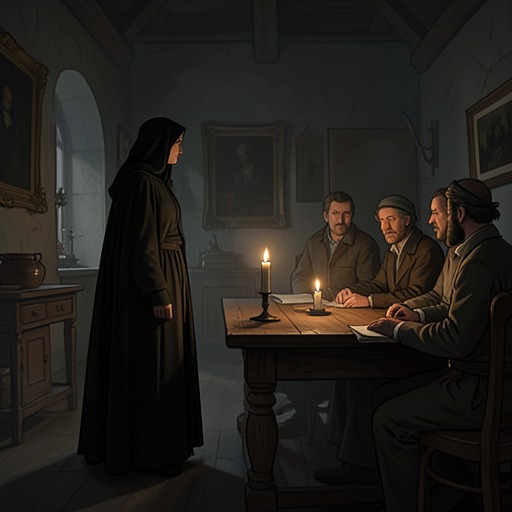
Fitzwilliam arrives with Thomas Goodrich, Bishop of Ely, while Margaret is alone in her private chamber, dreading the everyday estate business waiting outside. He tells her that the king commands her to answer questions truthfully. In her private room, he says he has been questioning her sons Geoffrey Pole and Montague, and that they have spoken freely. He then presses Margaret to acknowledge that she has heard them speak against the king.
Margaret denies the accusations and rejects the implication that her family has plotted against Henry VIII. She says that neither she nor her sons have spoken against the king, that her sons never expressed a wish to join Reginald Pole, and that she has written no secret letters to Reginald. Asked about Geoffrey’s former steward, Hugh Holland, she says she knows only that he left Geoffrey’s service and went into business in London. She allows that he may have carried family news to Flanders, but says she has received no secret letters and burned none.
Her account also acknowledges that Geoffrey went to Thomas Cromwell and explained matters to his satisfaction, after which Holland’s goods were returned. Margaret presents this as an answer to suspicion rather than evidence of a conspiracy: she says Geoffrey was willing to account for himself, and repeats that the family has done nothing that can be proved against them. Fitzwilliam and the others ask the same questions repeatedly; she gives the same denials in reply.
News of Montague’s Death
Fitzwilliam later comes to Margaret’s room and tells her that Montague is dead. She meets the announcement steadily and asks what charge was brought against him. Fitzwilliam answers that the charge was treason, and says Montague and his cousins Henry Courtenay and Edward Neville were tried before their peers and found guilty of treason against the king.
Margaret reads the manner of his arrival as triumphant: she notes his solemn face and bright eyes, and experiences him as the bearer of the heartbreak she feared. That impression belongs to her perspective; what Fitzwilliam directly reports is the verdict and Montague’s death. Across the two encounters, he first interrogates Margaret about the family’s alleged disloyalty and later announces the lethal consequence of a treason conviction against her son.